For many visitors to Istanbul, the iconic silhouette of the Blue Mosque, with its cascade of domes and six slender minarets piercing the sky, is the enduring image of their trip. It is more than a mosque; it is a powerful symbol of the Ottoman Empire’s artistic and spiritual zenith, a masterpiece that dominates the Sultanahmet skyline. For travelers, a visit here is often the profound historical and architectural centerpiece of curated?Turkey Tours, which expertly frame its significance within the grand narrative of Istanbul and the wider nation.
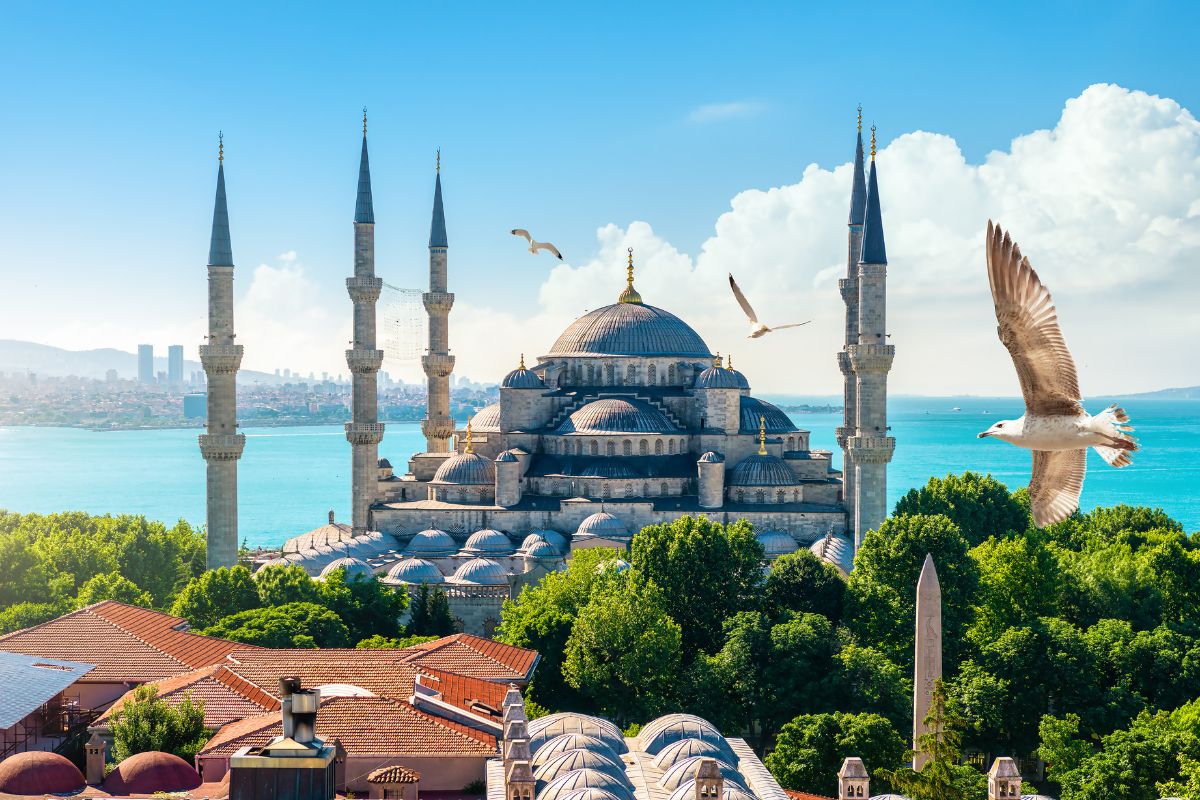
This article delves beyond the postcard view to explore the Blue Mosque’s history, its groundbreaking architecture, the symbolic meaning woven into its very stones, and the practical insights you need for a respectful and enriching visit.
Historical Context: The Sultan’s Ambition
To understand the Blue Mosque, one must understand the era of its creation and the man who commissioned it. It was built between 1609 and 1617 under the rule of Sultan Ahmed I. This was a complex period for the Ottoman Empire. The longstanding military and economic dominance was showing signs of strain, and the sultan had not won any major wars—traditionally the source of wealth and legitimacy used to fund such imperial mosques.
Driven by piety, a desire for divine favor, and perhaps a need to assert his authority through cultural and religious patronage, Ahmed I chose to build a monumental imperial mosque (külliye) opposite the Hagia Sophia. This was a bold statement. Hagia Sophia, the former cathedral of Byzantine emperors converted into a mosque after the 1453 conquest, was the architectural and symbolic pinnacle of the city. By building his own grand mosque directly facing it, Ahmed I sought to create an Islamic counterpart that would rival, and in his view, surpass, the Christian monument in grandeur and sanctity. He funded the construction directly from the imperial treasury, an act that drew some controversy but underscored his personal commitment.
Architectural Genius: The Pupil Mastering the Craft
The colossal task of realizing the Sultan’s vision fell to the court architect,?Sedefkâr Mehmet A?a. He was not just any builder; he was the chief pupil of the legendary?Mimar Sinan, the empire’s greatest architect who had perfected the classical Ottoman style. For Mehmet A?a, this project was the ultimate test to prove himself worthy of his master’s legacy.

He took Sinan’s principles—structural clarity, harmonious proportions, and a soaring central dome—and pushed them to their most magnificent expression. The design is the culmination of two centuries of Ottoman mosque development. However, Mehmet A?a also looked across the square for inspiration, incorporating Byzantine elements from Hagia Sophia, most notably in the use of a great central dome supported by semi-domes, creating a vast, unified interior space. The result is a triumphant synthesis of traditional Islamic architecture, Sinan’s classical Ottoman genius, and the inherited architectural language of Constantinople itself. It is widely considered the last and most splendid masterpiece of the classical period.
A Guided Tour: Decoding the Exterior
Approaching the mosque, one is first struck by its exterior composition and the sheer scale of its forecourt.
The Courtyard (Avlu):?Preceding the mosque itself is a vast, colonnaded courtyard, nearly as large as the prayer hall. This serene space, entered through a majestic gateway, is a defining feature of imperial mosques, meant for ablution and contemplation. Its arcades are topped by 30 small domes. At its center sits a beautiful, hexagonal ablution fountain (?ad?rvan), though its primary purpose is ornamental.
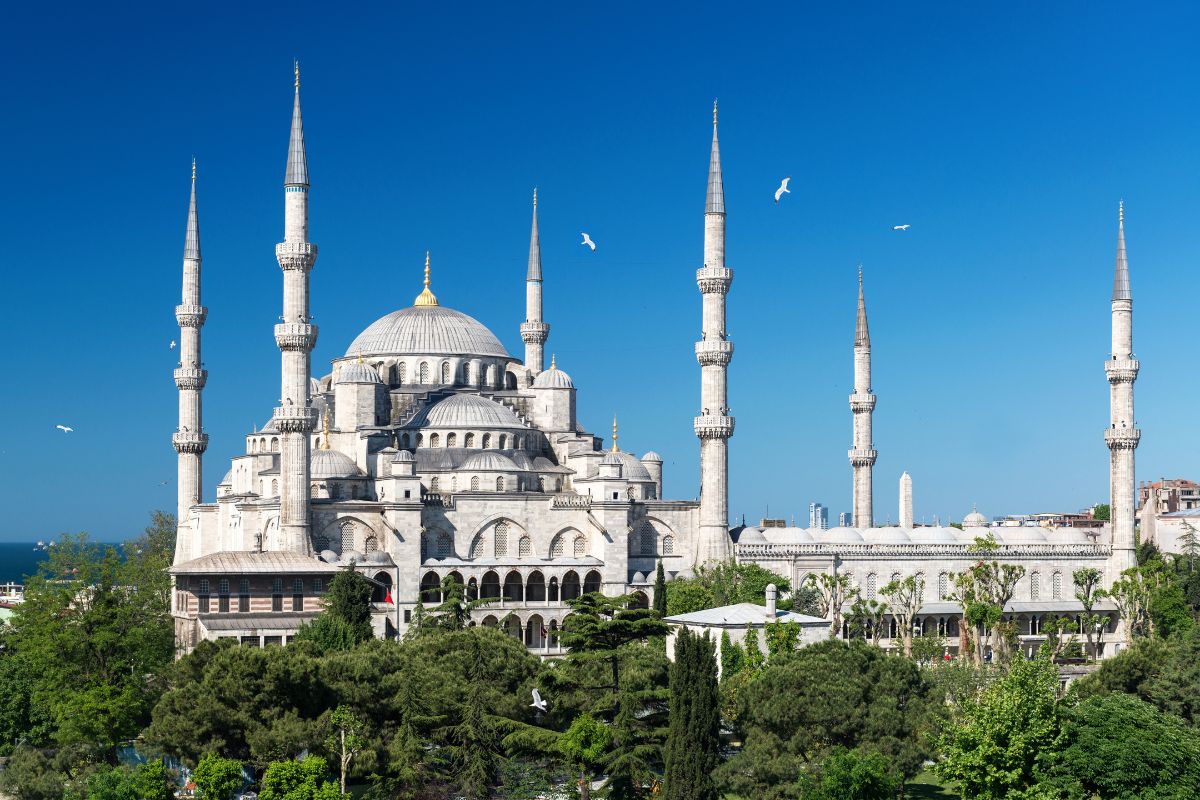
The Cascading Domes:?The mosque’s silhouette is a masterful pyramidal composition. A great central dome, 23.5 meters in diameter and 43 meters high, rests on four colossal “elephant foot” pillars. It is flanked and supported by a cascade of four ascending semi-domes and smaller domes, creating a rhythm that is both dynamic and perfectly balanced.
The Six Minarets:?This is the Blue Mosque’s most famous and, at the time, controversial feature. Only the mosque in Mecca had six minarets. When Ahmed I was criticized for his presumption, legend holds that he resolved the issue by financing the construction of a seventh minaret at the Mecca mosque. The minarets are fluted and feature multiple balconies (?erefe), from which the call to prayer was traditionally issued. They frame the entire structure, drawing the eye heavenward.
The Interior Revelation: Where It Gets Its Name
Passing through the massive bronze door, visitors enter another world. The exterior’s solid grey stone gives way to an interior awash with light and color, a serene and uplifting space designed to inspire awe and devotion.
A Forest of Blue:?The mosque’s popular name comes not from its exterior, but from the tens of thousands of hand-painted??znik tiles?that adorn its lower walls and pillars. ?znik, a town southeast of Istanbul, produced the world’s finest ceramics in the 16th and early 17th centuries. The tiles here represent its peak artistry. They feature over?50 different tulip designs, along with cypress trees, roses, and intricate floral and geometric patterns, all in a dominant palette of cobalt blue, turquoise, green, and white against a brilliant red background. This sea of blue gives the interior its ethereal, heavenly quality.
The Play of Light:?The interior is illuminated by more than 200?stained glass windows, a testament to the mastery of Ottoman glassmakers of the period. The current windows are later replacements, but they maintain the original effect: filtering daylight into soft, jewel-toned hues that dance across the tiles and carpets.
Calligraphy as Sacred Art:?Above the tile level, the dome, semi-domes, and arches are adorned with breathtaking examples of Islamic calligraphy. The work of the period’s greatest calligrapher,?Seyyid Kas?m Gubari, these inscriptions are not mere decoration; they are verses from the Quran and the names of the early caliphs, serving to instruct and elevate the spirit of the worshipper. The central dome famously bears an inscription of the Surah Al-Fatihah.
The Prayer Focus:?The direction of Mecca (qibla) is indicated by the finely carved white marble?mihrab?(prayer niche) and the elevated?minbar?(pulpit) from which the imam delivers sermons. The mosque is still an active house of worship, and the rich red carpets are lined with rows for the faithful to pray.
Visiting with Respect: A Practical Guide
The Blue Mosque is a living mosque, and visitors are welcome outside of the five daily prayer times. A respectful visit enriches the experience for all.
Dress Code:?Modest dress is strictly required. For both men and women, clothing must cover shoulders and knees. Women must also cover their hair with a headscarf. Scarves are often available to borrow at the entrance, but it is better to bring your own.
The Ritual of Entry:?All visitors must remove their shoes. Plastic bags are provided to carry them. Silence and respectful behavior are expected inside. Avoid walking directly in front of someone who is praying.
Timing is Everything:?The mosque closes to tourists for about 90 minutes during each of the five daily prayer times. The most crowded period is midday. For a more contemplative experience with softer light filtering through the windows, aim for an early morning visit or late afternoon. Friday mornings are particularly busy due to the special congregational prayers.
The Complete Complex (Külliye):?Like all imperial mosques, the Blue Mosque was built as a social complex. While parts are now closed, you can still see the tombs of Sultan Ahmed I, his wife, and some of his sons in a garden behind the mosque. The original complex included a madrasa (theological school), a hospital, a kitchen for the poor, and a caravanserai, representing the mosque’s role as the heart of a community.
Enduring Legacy: More Than a Monument
Today, the Blue Mosque (officially the Sultan Ahmed Mosque) stands in silent, powerful dialogue with Hagia Sophia across Sultanahmet Park. This dialogue is the very story of Istanbul: a conversation between empires, faiths, and architectural traditions. The Blue Mosque did not seek to erase the past but to engage with it, absorb its lessons, and proclaim a new chapter of imperial and Islamic glory.
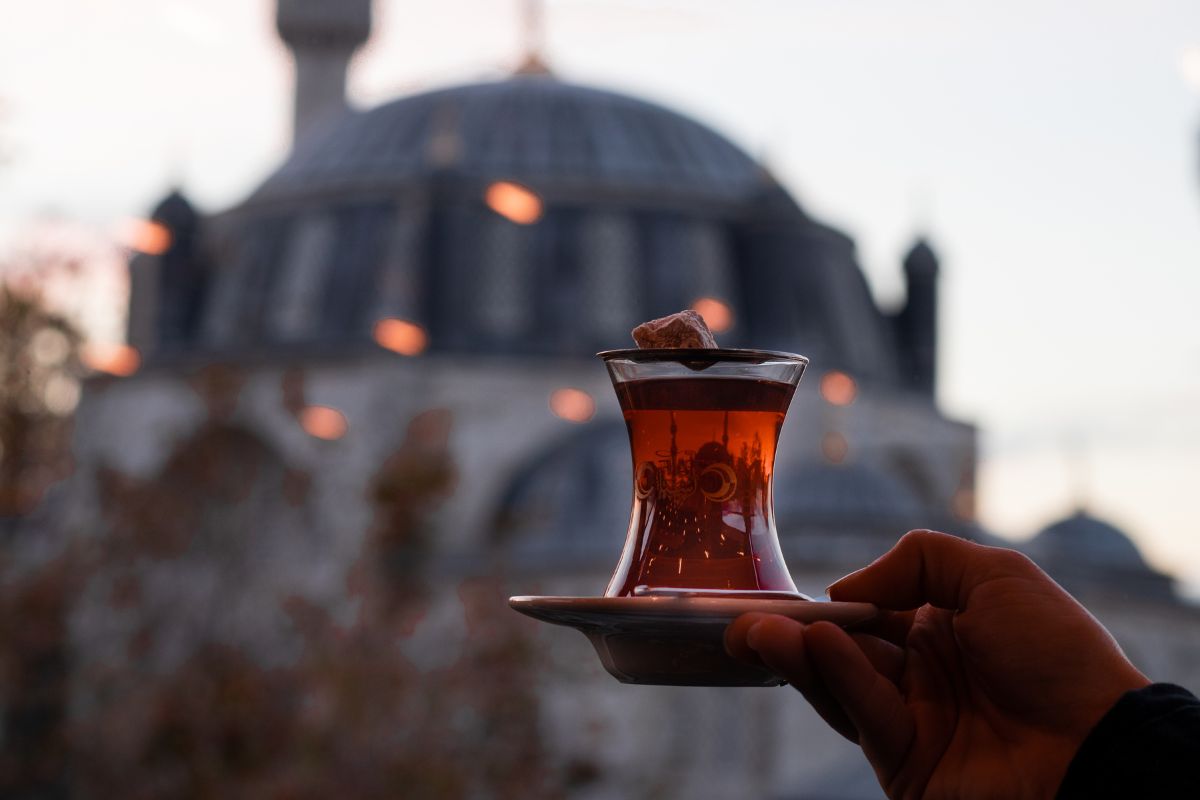
For the modern visitor, it offers an unparalleled immersion into Ottoman art, spirituality, and ambition. It is a place where architecture becomes philosophy, where tilework becomes poetry, and where light itself is harnessed for spiritual effect. To stand under its great dome, surrounded by the whispers of history and the quiet devotion of worshippers, is to understand why this building remains, centuries after its completion, not just a stop on a tour, but a profound encounter with the soul of a city and an empire. It is a cornerstone of any journey to Turkey, a masterpiece that continues to command awe and inspire reverence, perfectly encapsulating the majestic spirit of the nation’s imperial past.


Leave a Reply