I’d assumed, going in, that a road trip through seven countries would mostly be about the driving, long days behind the wheel, borders, logistics. It wasn’t. Most of what I remember now happened off the main route entirely: a canyon I only found because I’d left an afternoon unplanned, a waterfall a guesthouse owner mentioned almost as an afterthought, a mountain pass with no road at all. The car got me there. It just wasn’t the point once I arrived.
Linking seven countries into one route
The backbone of the trip was straightforward on paper: Slovenia into Croatia, down into Bosnia and Herzegovina, along the Montenegrin coast, north through Albania, across into North Macedonia, and finishing in Serbia. Fourteen days, roughly 2,400 kilometers, one car the entire way.
What isn’t obvious until you actually plan it is how little the borders in this region correspond to how the landscape or the culture actually changes. Sometimes a border crossing is nothing, a checkpoint, a stamp, the same mountains on both sides. Other times you cross a line on a map and the language, the currency, the coffee, and the pace of the evening all shift within twenty minutes of driving. Building the route wasn’t really about connecting seven capitals in the most efficient order. It was about figuring out which borders mattered and giving myself room around those.
Before any of that, I compared rental options through Discover Cars, specifically hunting for a supplier that wouldn’t restrict the car to the EU. That one requirement cut the available options down considerably, plenty of companies are fine with Slovenia and Croatia and stop there. Being able to filter for cross-border permission across multiple suppliers in one place, rather than emailing companies individually and hoping for a clear answer, is what actually made this route plannable rather than theoretical.
The coastline: Slovenia’s sliver and Montenegro’s fjord
Slovenia only gets about 46 kilometers of coast, and I still spent a full day on it. Piran’s peninsula, with its Venetian bell tower and narrow lanes running down to the water, felt like a preview of the Adriatic road ahead rather than a destination in its own right, which, in hindsight, is exactly what it was.
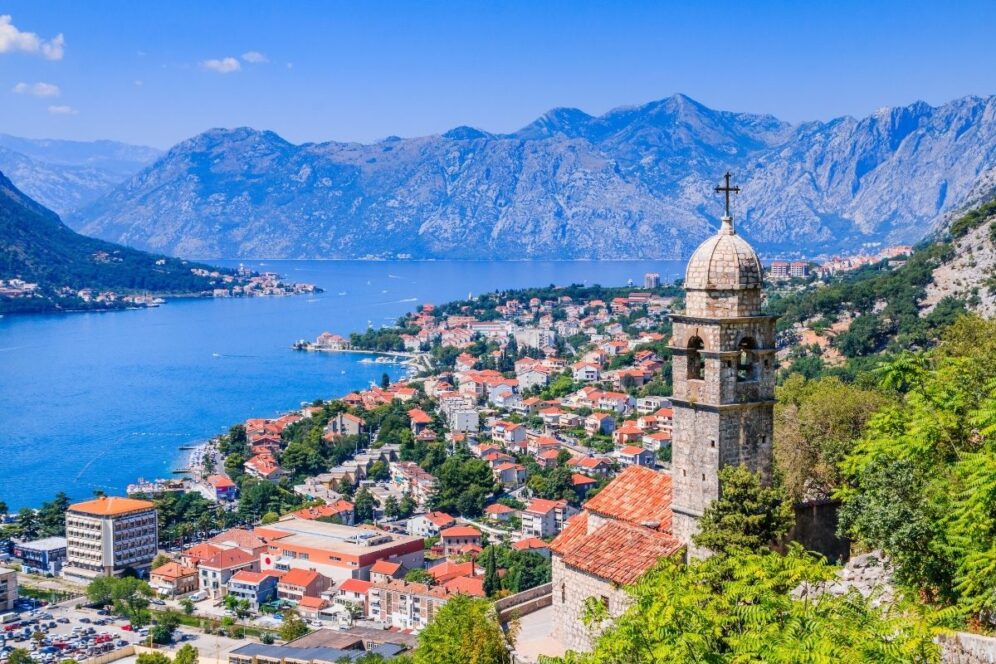
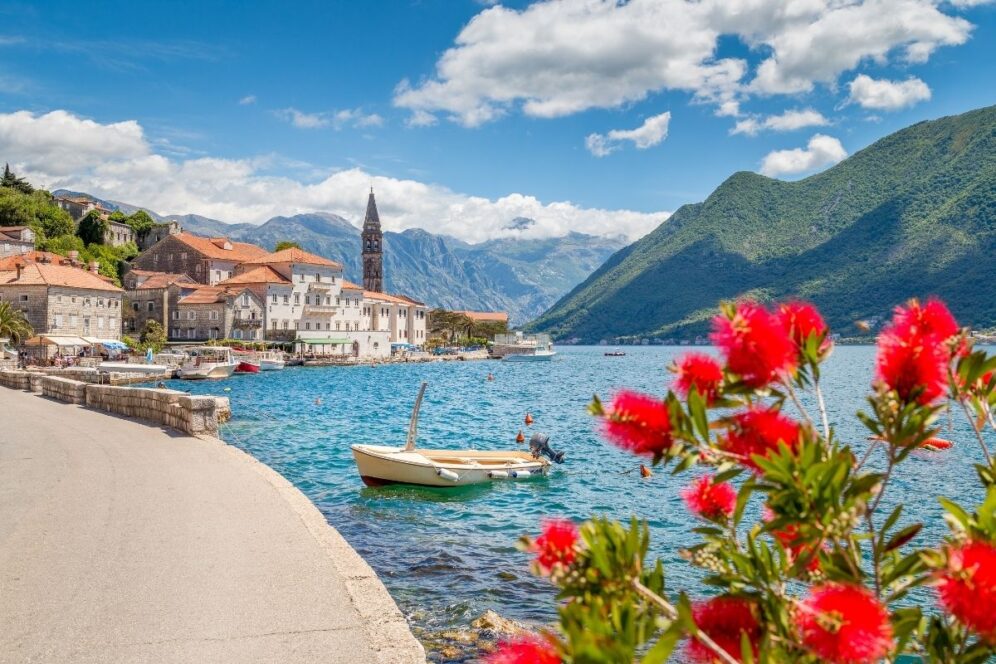
Montenegro’s coastline is the one that actually stops you. The Bay of Kotor cuts so deep into the mountains that it looks more like a Norwegian fjord than anything you’d expect on the Adriatic, sheer rock rising straight out of the water, with Kotor’s walled old town tucked into the innermost curve of it. Driving the road that hugs the bay, rather than cutting across on the ferry every time, took longer than it needed to and I regret none of it.
National parks worth the detour
This is where having a car stopped being convenient and started being the entire reason the trip worked.
In Croatia, I skipped the more famous lake parks in favor of Paklenica, a canyon national park carved into the southern end of the Velebit mountains near Zadar. The Velika Paklenica canyon walls rise so sharply that the park is Croatia’s premier rock-climbing destination, and even without climbing gear, the hike up past Ani?a Kuk, a wall so vertical it looks unclimbable from the canyon floor, was one of the best few hours of the whole trip.
In Slovenia, before I’d even crossed into Croatia, I detoured up into the So?a Valley, in the shadow of Triglav National Park, for a few hours of whitewater rafting on the So?a River, locally nicknamed the Emerald River for water so clear and so improbably turquoise it barely looks real in photos, let alone in person. None of this is reachable in any practical way without your own transport; the valley sits well off the main road network, and the rafting outfitters all assume you’re arriving by car.
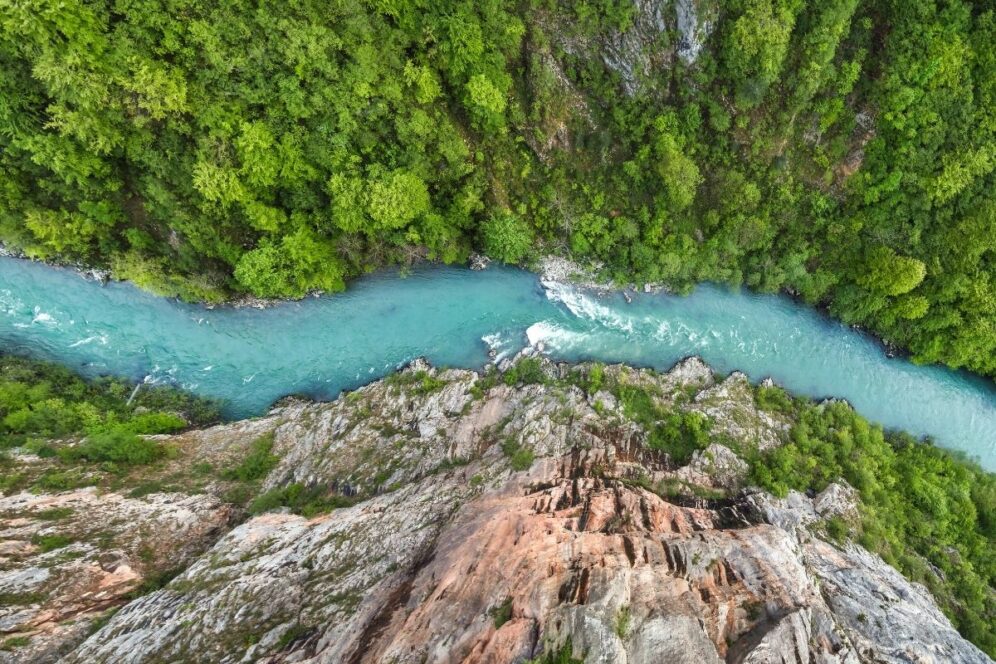
Montenegro’s Durmitor National Park, up around Žabljak, was the other standout, the Tara River Canyon, sometimes called the deepest canyon in Europe, spanned by the dramatic ?ur?evi?a Tara Bridge. I did the zipline across the canyon mostly on a dare to myself, and then spent the following morning at Black Lake, a glacial lake inside the park that’s about as far from the coastal heat as Montenegro gets.
Mountain towns nobody reaches without a car
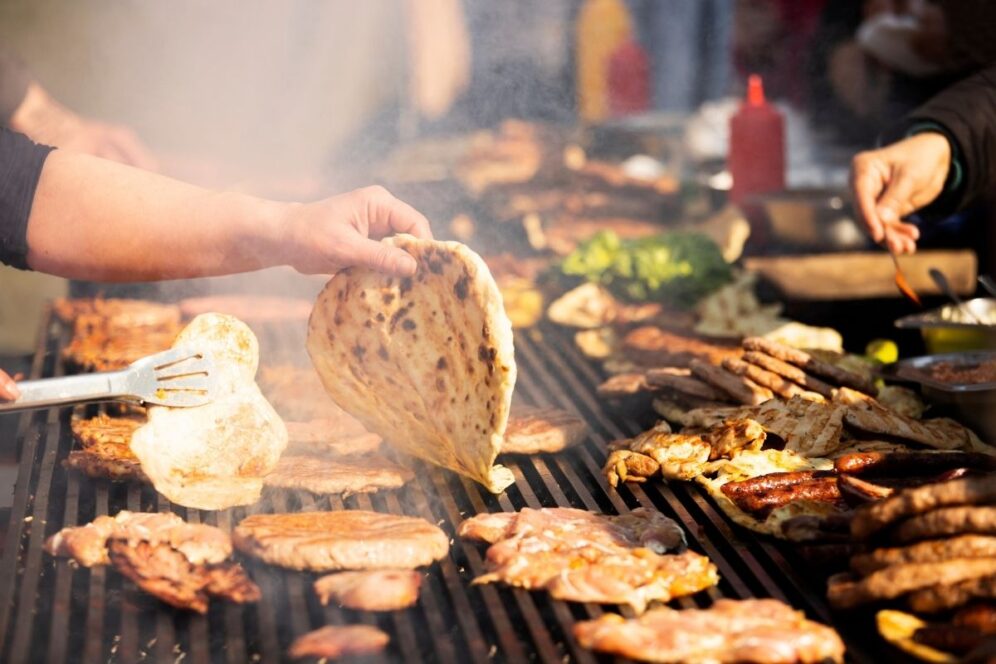
The Albanian Alps were the clearest argument for the whole road trip. Rather than driving straight through the north on the way to the coast, I based myself in Valbona and hiked the mountain pass over to Theth, a genuinely demanding route, climbing past 1,800 meters between two valleys that have no direct road connecting them at all. The only ways in and out are the hike itself, a rough mountain road, or the Lake Komani ferry, and I did all three across two days, staying in a family-run guesthouse in Theth where dinner was whatever the family had cooked that evening, no menu involved.
North Macedonia’s Skopje sits beneath a hill town of its own, the Old Bazaar and Kale Fortress, a walled complex that’s watched over the city since the 6th century, but it was the drive out to nearby Matka Canyon that stuck with me more. A man-made lake wedged into a limestone gorge fifteen minutes from the capital, with kayaks for rent right at the water’s edge and a boat trip to Vrelo Cave, one of the deepest underwater caves in Europe, tucked into the cliffs above the lake.
The hidden stops that made the trip
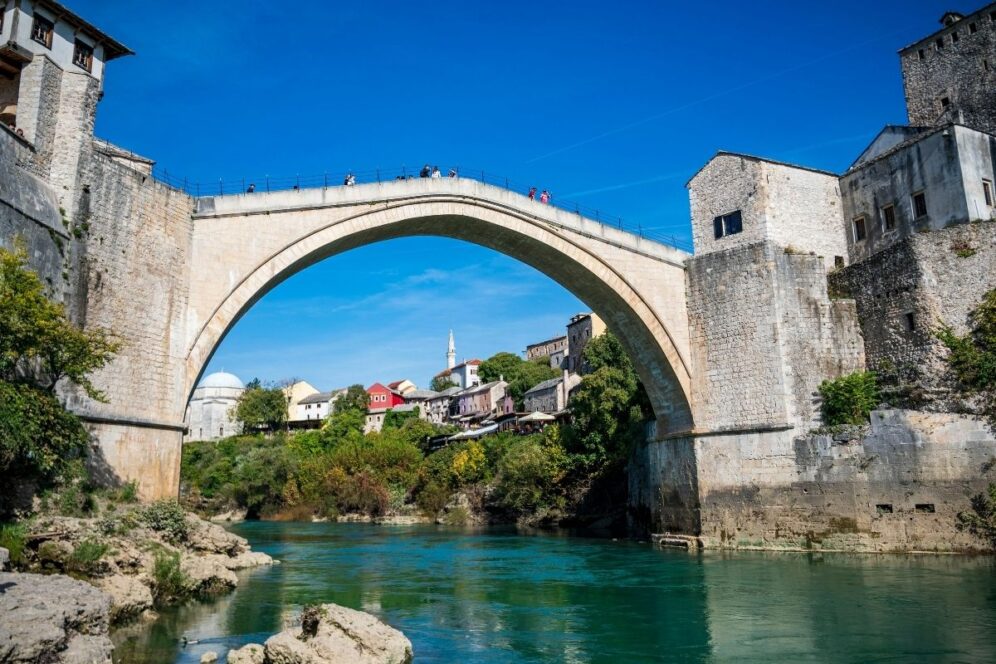
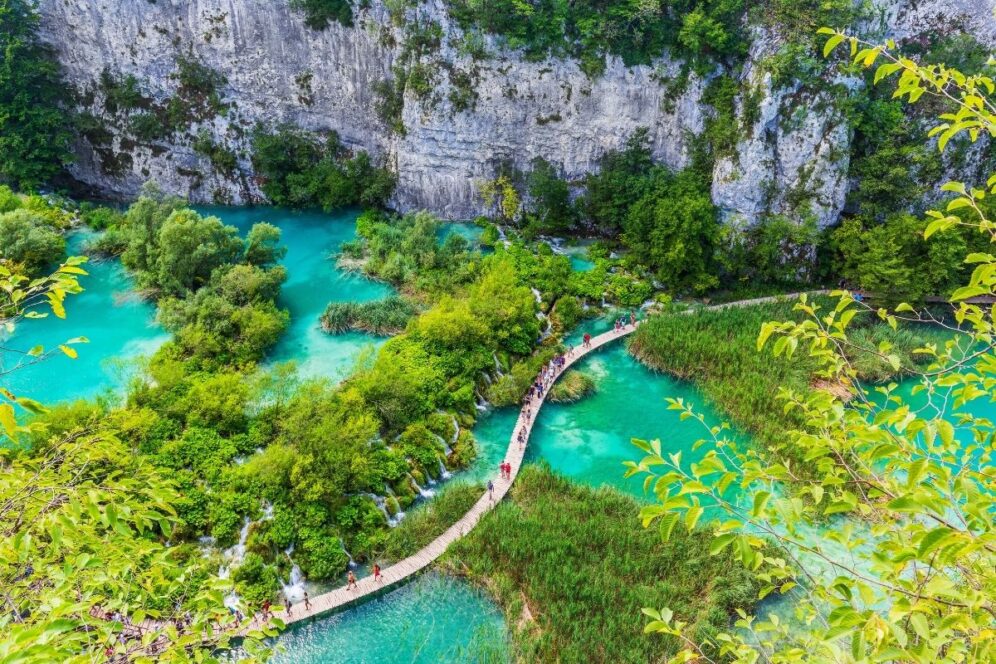
Some of the best parts of a route like this are the ones you don’t plan for. Outside Mostar, in Bosnia and Herzegovina, a guesthouse owner mentioned Kravice Waterfalls almost in passing, a 25-meter-wide travertine waterfall on the Trebižat River where swimming is not just allowed but genuinely the point, a natural amphitheater pool that felt closer to something out of a nature documentary than a roadside stop forty-five minutes from a city.
In western Serbia, the last genuine surprise of the trip was Drvengrad, also called Küstendorf, a wooden village built on a hilltop above Mokra Gora by filmmaker Emir Kusturica as a film set, and never taken down. It sits right beside the Šargan Eight, a narrow-gauge heritage railway whose track loops in the shape of a figure eight to climb the mountain, complete with 22 tunnels and views back down over the valley that made the whole detour worth the extra day.
None of these, the waterfall, the wooden village, the canyon lake fifteen minutes from the capital city, showed up on any list I’d made before leaving. They came from guesthouse owners, a shopkeeper, and a conversation at a rafting base. Having the car meant I could actually act on the tip the same afternoon instead of filing it away for a trip I’d never take.
Can one rental car actually do the whole trip?
This was the question I got asked most before leaving, and the honest answer is: yes, but only with real planning, not just a booking.
Three things determine whether it’s possible at all. Cross-border permission is the biggest one, plenty of rental agreements are EU-only by default, and taking the car outside that list without written permission can void your insurance entirely rather than just cause an awkward conversation at a checkpoint. Mileage matters almost as much, a route covering this much ground needs an unlimited or genuinely high allowance, not a cap built for city rentals. And drop-off flexibility is worth checking early if you’re not looping fully back to your pickup city, since one-way rentals between countries often carry a real surcharge and aren’t offered by every supplier at all.
This is exactly where comparing suppliers rather than booking whatever came up first actually paid off. Discover Cars let me filter for cross-border permission and see the conditions stated clearly before I booked, rental terms and total price shown upfront, with no surprise fees waiting at the counter, rather than discovering a restriction after the fact. With more than 1,000 suppliers spread across over 50,000 locations in 164 countries, there was enough real choice to find a company willing to say yes to the entire route rather than just the easy first half of it.
I also paid for full coverage across the whole rental period. Mountain switchbacks, unfamiliar parking in seven different old towns, and considerably more kilometers than a normal rental sees, it’s exactly the kind of trip where that coverage earns its cost back the first time anything goes even slightly wrong, and gave me one less thing to think about on the Kotor road and the Šargan Eight’s mountain approach alike.
What I’d tell anyone planning this drive
Don’t schedule your car pickup for the same time your flight lands. Immigration and baggage on an international arrival routinely eat more time than expected, and I built in a two-hour buffer that I was genuinely relieved to have. You’ll need a credit card in the lead driver’s name for the deposit, a debit card usually isn’t accepted.
My plans shifted once, four days in, when I decided the Valbona-Theth hike deserved an extra night on either side rather than the single overnight I’d originally booked. Being able to change the reservation for free up to 48 hours before pickup meant that decision cost nothing. I also called the customer support line once, from a fuel stop outside Žabljak, with a question about my insurance paperwork for the Bosnia crossing. It’s staffed 24/7 in 35 languages, and I had my answer in English within a few minutes.
For what it’s worth, Discover Cars currently holds a 4.6 rating on Trustpilot from more than 263,000 reviews, and picked up Gold at the 2025 Magellan Awards for Travel Services Marketing, along with World’s Best Car Rental Booking Website and App at the 2025 World Travel Tech Awards. None of that replaces reading your own agreement carefully, which I did every single time, but the website and app work in multiple languages, and kept every rental detail, pickup direction, and confirmation in one place across seven countries and roughly a dozen different overnight stops, which by the second week was doing more organizational work than I was.
Would I actually recommend it
Without hesitation, though, I’d stretch it to three weeks if I could do it again, and I’d build in at least one entirely unplanned day per country rather than treating the schedule as fixed.
What I keep coming back to isn’t any single stop on the list, it’s how often the best parts of the trip came from something nobody had told me to expect. A waterfall mentioned in passing. A pass with no road. A wooden village nobody puts on a map. Seven countries, one car, and the freedom to actually follow a tip the moment you hear it rather than filing it away for later.


Leave a Reply