Every iconic destination has a journey that becomes part of the story. For Machu Picchu, that journey begins long before you arrive at the ancient Inca citadel. Nestled in Peru’s Sacred Valley, the town of Ollantaytambo serves as the gateway for most travelers making their way to one of the New Seven Wonders of the World.
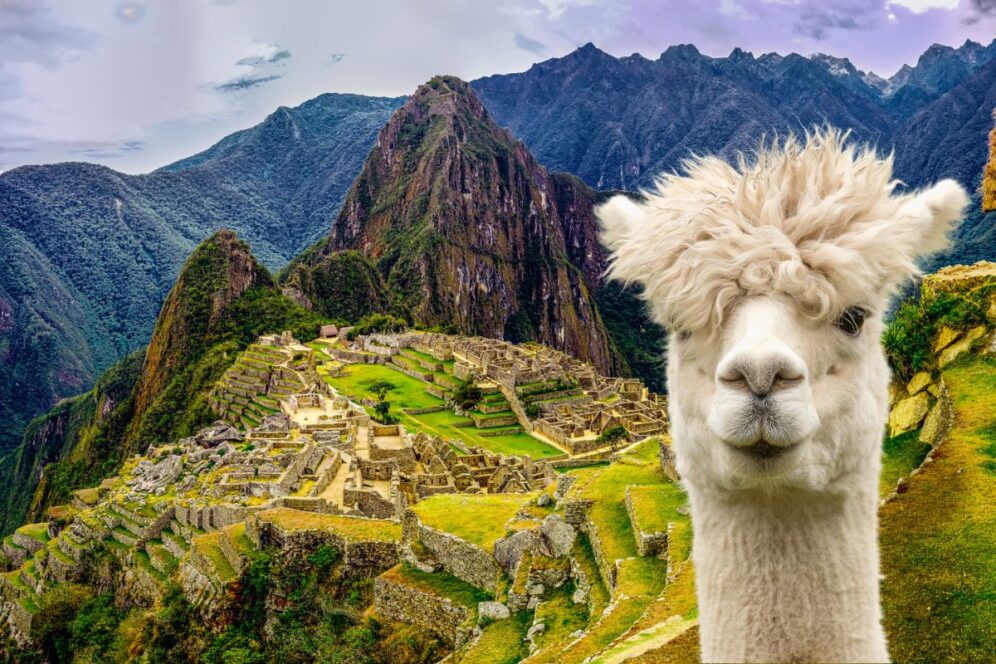
While many visitors focus entirely on reaching Machu Picchu, the route itself offers dramatic mountain scenery, fascinating history, and a gradual introduction to the landscapes that made the Inca civilization so remarkable. Instead of treating transportation as simply getting from one place to another, it’s worth slowing down and appreciating everything this incredible journey has to offer.
Discovering Ollantaytambo
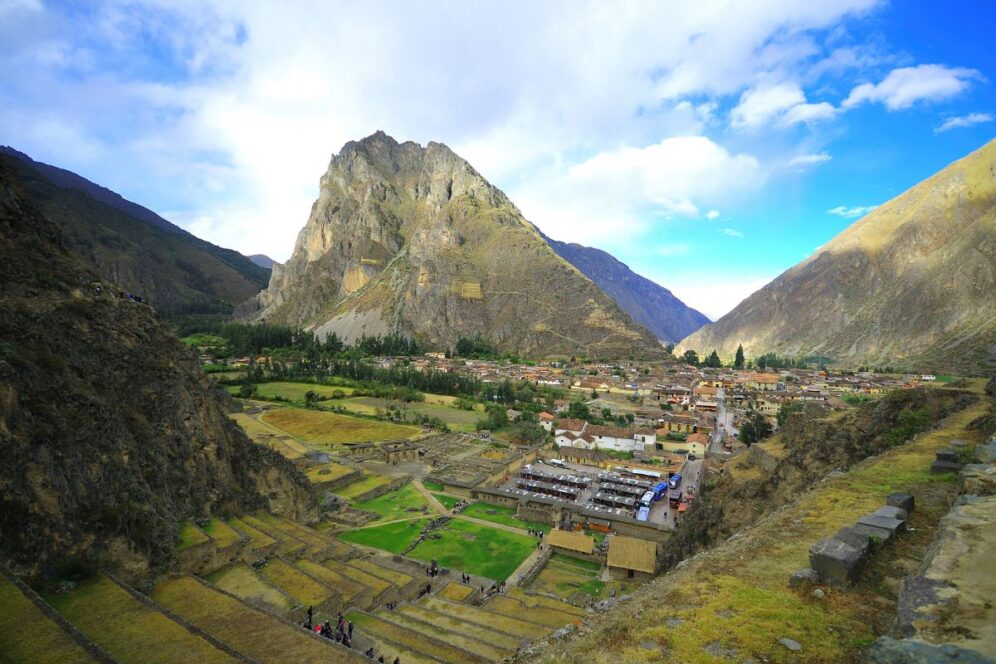
Before boarding a train, spend some time exploring Ollantaytambo itself. Unlike many historic towns that have changed dramatically over the centuries, Ollantaytambo still preserves much of its original Inca urban layout. Narrow stone streets, flowing water channels, and ancient walls remain part of everyday life, giving visitors a rare opportunity to experience a living piece of Inca history.
The town’s impressive archaeological fortress dominates the hillside above the village and rewards visitors with sweeping views across the Sacred Valley. Massive terraces, ceremonial structures, and finely crafted stonework demonstrate the engineering skills that would later reach their peak at Machu Picchu. Many travelers consider Ollantaytambo one of Peru’s most fascinating destinations in its own right.
Why Most Travelers Depart from Ollantaytambo
While it’s possible to begin your journey in Cusco, many visitors choose to travel to Ollantaytambo first before boarding the train. This approach offers several advantages:
- Shorter overall train journey
- Opportunity to explore the Sacred Valley
- Fewer transfers during the day
- A more relaxed travel schedule
- Time to experience one of Peru’s best-preserved Inca towns
Since Ollantaytambo sits much closer to the railway, it has become the primary departure point for visitors continuing toward Machu Picchu.
A Scenic Railway Unlike Any Other
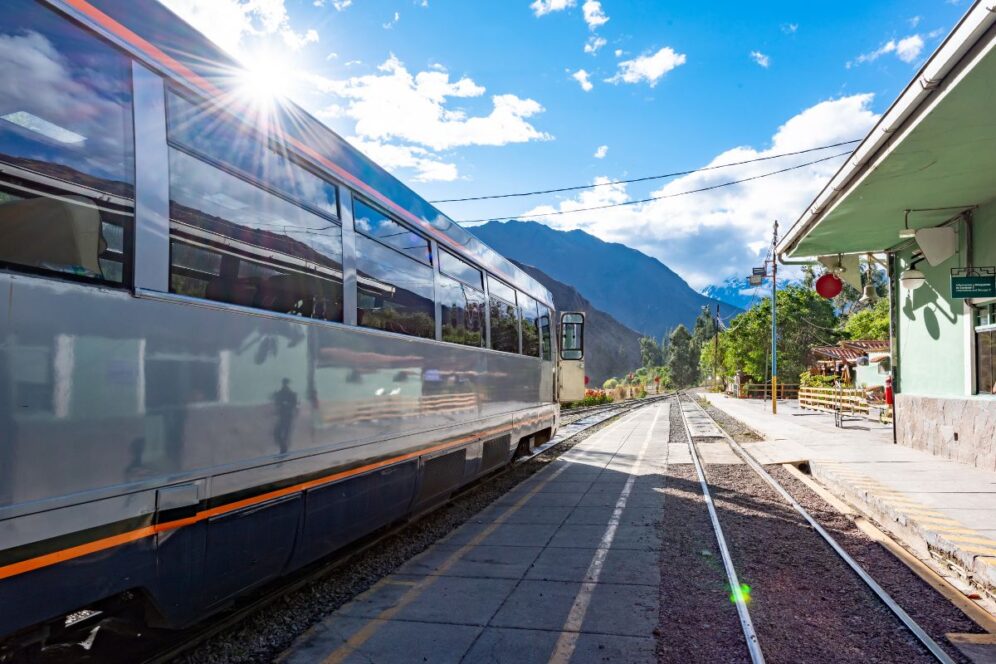
The railway between Ollantaytambo and Machu Picchu Pueblo follows the course of the Urubamba River through some of Peru’s most spectacular mountain scenery.
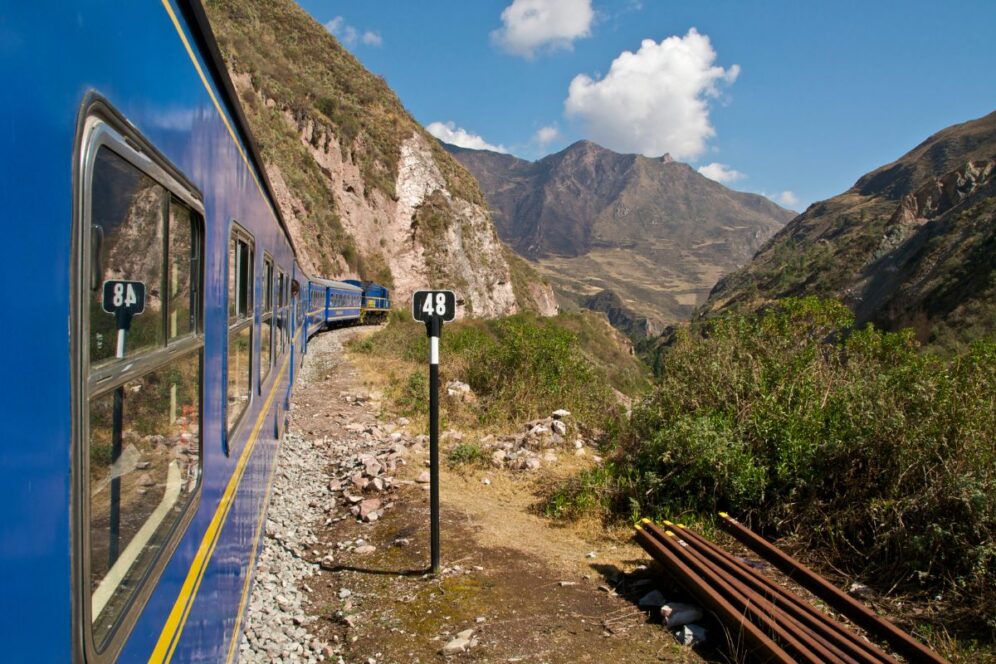
Over approximately 43 kilometres (27 miles), the landscape gradually transforms as the train leaves the broad Sacred Valley behind and enters narrower canyons surrounded by towering Andean peaks. The journey typically takes between 1.5 and two hours, depending on the service. Large panoramic windows allow passengers to fully appreciate the changing scenery. Along the way you’ll see:
- Steep mountain cliffs
- Rushing rivers
- Ancient agricultural terraces
- Cloud forest vegetation
- Remote farming communities
- Snow-capped peaks in the distance
It’s one of those rare train journeys where people spend more time looking out of the window than at their phones.
A Journey Through History
The Sacred Valley was once one of the most important regions of the Inca Empire. Its fertile lands supported agriculture, while strategically placed settlements connected Cusco with religious centres and royal estates throughout the Andes.
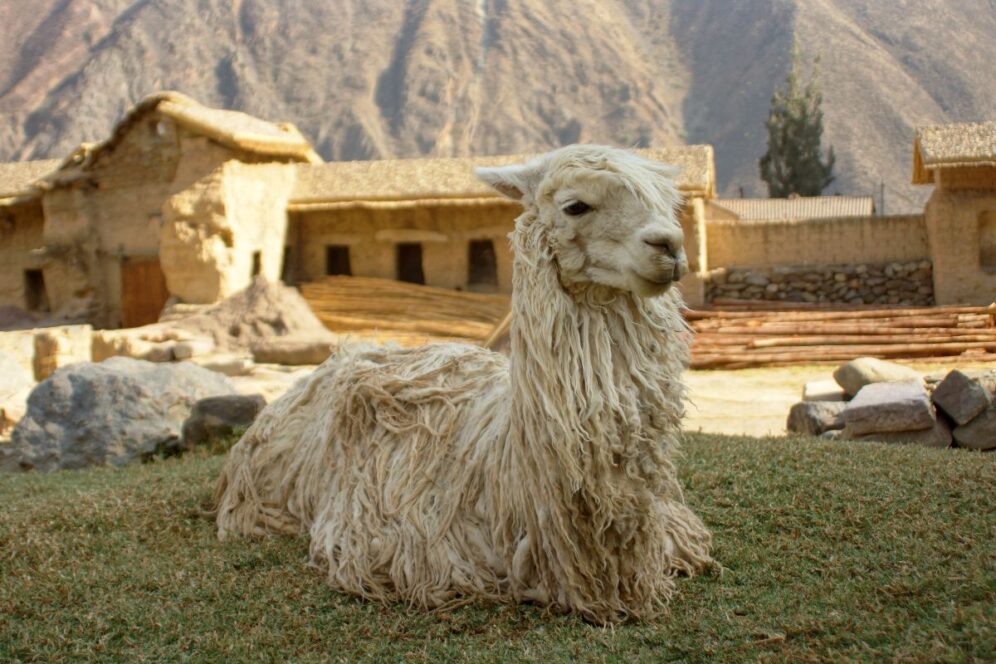
Travelling by train today follows a corridor that has been significant for centuries. Although modern railways have replaced ancient footpaths, the surrounding mountains and valleys remain remarkably unchanged. This sense of continuity is part of what makes the experience so special.
What Makes the Route Feel Different
Unlike many scenic rail journeys where the destination steals all the attention, this route builds anticipation gradually. Every bend in the river reveals another dramatic landscape.
The mountains seem to close in around the tracks. Vegetation becomes denser as the altitude changes. By the time you reach Machu Picchu Pueblo, you’ve already experienced one of the most beautiful sections of the Peruvian Andes. Rather than feeling like transportation, the railway becomes an essential part of the adventure.
Arriving in Machu Picchu Pueblo
The train arrives in Machu Picchu Pueblo, also known as Aguas Calientes. This small mountain town sits at the base of the archaeological sanctuary and acts as the final gateway before visitors continue to the citadel. Here you’ll find:
- Hotels
- Restaurants
- Cafés
- Markets
- Bus departures to Machu Picchu
From the station, visitors board shuttle buses for the final 25 to 30-minute climb to the entrance of the archaeological site. Many travellers choose to spend a night here, allowing for an early morning visit to Machu Picchu when the mountains are often covered in beautiful morning mist.
Planning the Journey
Because Machu Picchu operates with timed entry tickets and designated visitor circuits, transportation should always be planned alongside your entrance reservation. It’s helpful to coordinate:
- Train departure times
- Bus transfers
- Entrance ticket times
- Guided tours
- Hotel reservations
Booking these elements together creates a much smoother experience, particularly during the busiest months of the year.
If you’re researching the Ollantaytambo to Machu Picchu journey before booking, understanding how the train ride, transfers, and entry schedules fit together can help you build a more relaxed and enjoyable itinerary.
Tips for First-Time Visitors
A few simple preparations can make the journey even more enjoyable:
- Pack light: You’ll appreciate having only a small daypack while moving between stations and buses.
- Dress in layers: Mountain weather changes quickly, and temperatures can vary throughout the day.
- Arrive early at the station: Boarding is well organised, but arriving ahead of departure reduces unnecessary stress.
- Keep your camera ready: Some of the most spectacular scenery appears unexpectedly as the train follows the river through narrow valleys.
- Spend time in Ollantaytambo: Don’t rush straight to the station; it’s one of Peru’s most rewarding historic towns.
More Than a Train Ride
One reason this journey leaves such a lasting impression is that every stage feels connected. You begin in a centuries-old Inca settlement, and travel through landscapes shaped by mountains, rivers, and history. You arrive in a small town built around one of the world’s greatest archaeological treasures. Each part naturally leads to the next, creating an experience that feels complete rather than rushed.
Final Thoughts
It’s easy to think of Machu Picchu as the main event, but the journey from Ollantaytambo deserves just as much attention. Between the remarkable history of the Sacred Valley, the spectacular railway through the Andes, and the anticipation that builds with every kilometre, the route becomes one of the highlights of travelling through Peru.
For many visitors, the memories begin well before they step through the gates of the ancient citadel. Sometimes the most unforgettable part of a trip is everything you experience along the way.


Leave a Reply